
Specialized Processing Capabilities

Continuous commercial-scale manufacturing, supported by pilot-scale processing for evaluation and validation.

Download Capability Sheet (PDF)

Understanding Fluid-Bed Processing

Fluid-bed processing uses a controlled flow of air to suspend and move particles within a processing chamber. As particles circulate, precisely managed applications of liquid and controlled drying conditions enable changes to particle size, structure, and surface characteristics.

Depending on the material and process configuration, this technology supports agglomeration, granulation, and functional coating while maintaining consistent processing conditions.

Core Processing Capabilities

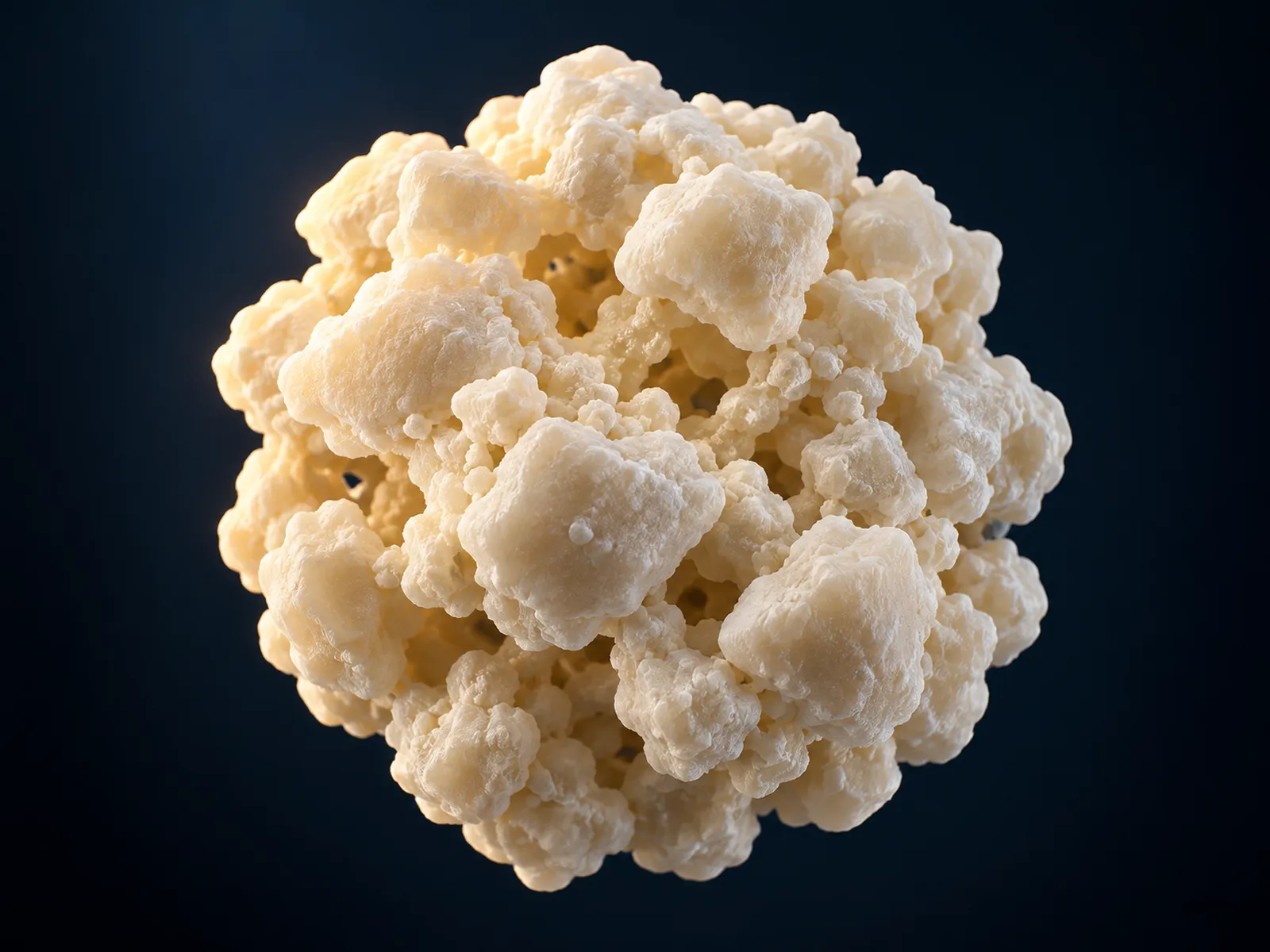
Conceptual illustration of an agglomerated particle: fine primary particles bound into a porous cluster. Not an actual micrograph.
Agglomerated particle structure

Instantization & Agglomeration

In practical terms, agglomeration helps fine powders wet and disperse more readily in liquids while improving flow and handling characteristics.

Technical details and applications

Agglomeration produces irregular, porous clusters of primary particles, often described as blackberry structures. Their open architecture increases the accessibility of individual particles to liquids, improving wettability and dispersibility in suitable applications. Agglomeration can also improve flow characteristics and bind fines into the clusters, giving a dustless or low-dust powder that is cleaner to handle, convey, and blend, and simpler to use in downstream processing.

Our continuous fluid-bed technology allows us to control agglomerate development and target the physical properties required for commercial production.

Applications span food, human and animal nutrition, and specialty industrial formulations where consistent mixing, dispersibility, and ease of use are important.
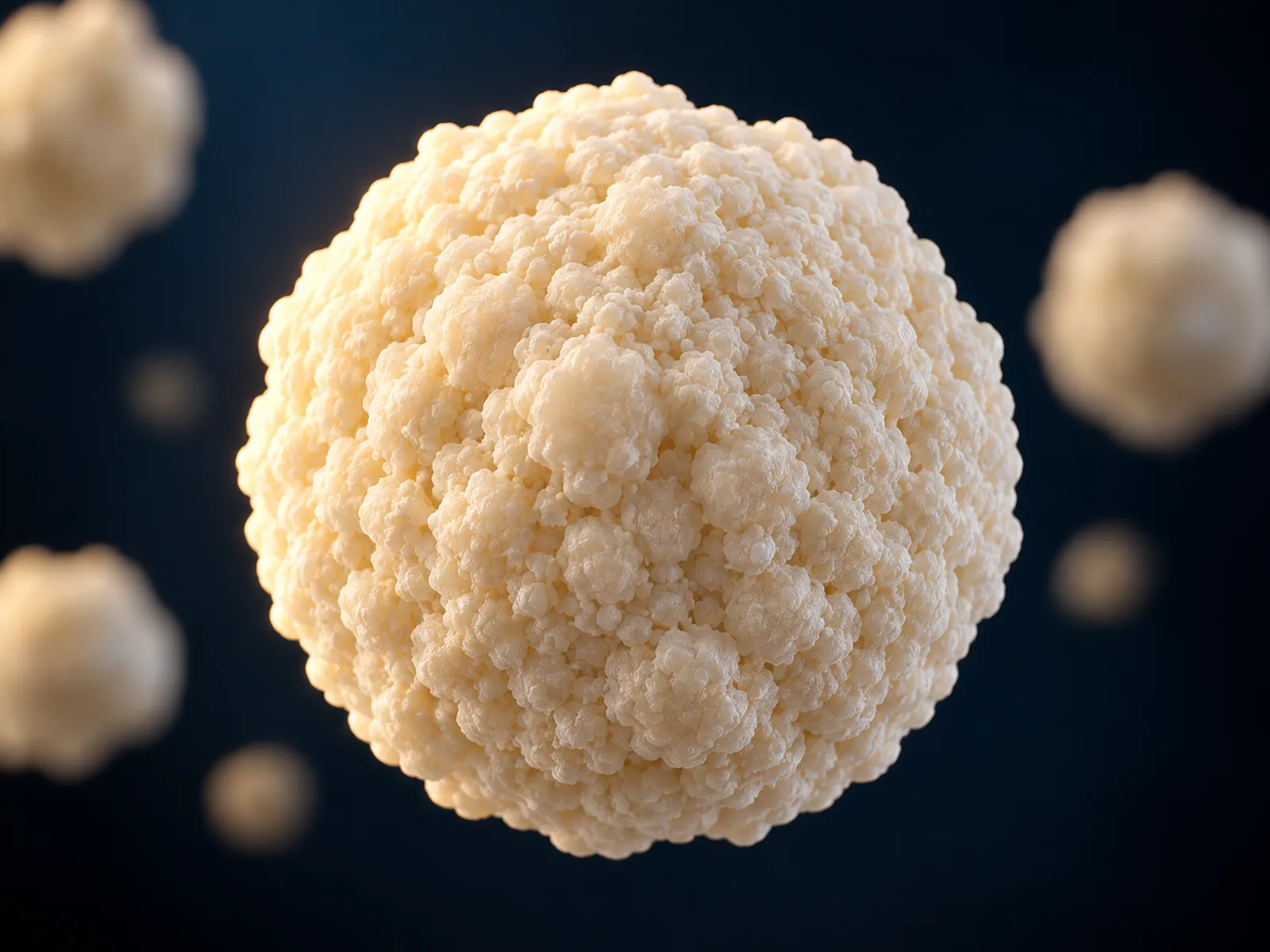
Conceptual illustration of a granulated particle: a dense, rounded granule. Not an actual micrograph.
Granulated particle structure

Granulation

Granulation creates particles with more consistent size and physical characteristics, making materials easier to handle, measure, and process.

Technical details and applications

Fluid-bed granulation produces more consolidated, typically spherical granules from a liquid matrix. Unlike the open structure of an agglomerate, these granules can be engineered for defined particle size, density, mechanical strength, and flow characteristics.

Because fine material is built into the granules, the finished product is dustless or low in dust. That makes material handling cleaner, keeps work areas and equipment cleaner, and supports consistent dosing and performance in downstream manufacturing processes.

Potential applications include functional ingredients, animal nutrition products, agricultural formulations, and specialty industrial materials where particle size, uniformity, and controlled processing conditions are important.

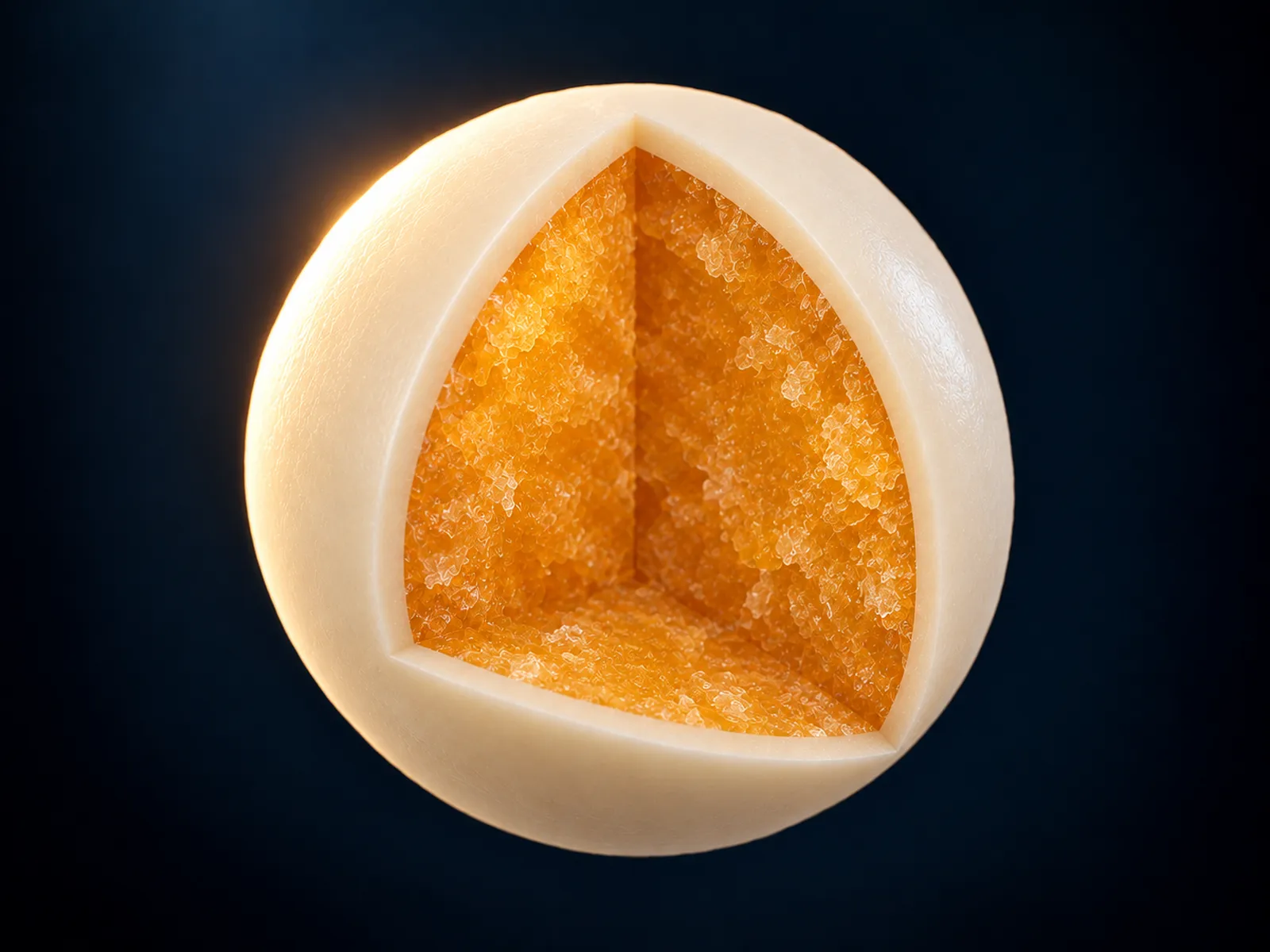
Conceptual illustration of a coated particle in cross section: a core inside a functional coating layer. Not an actual micrograph.
Coated particle cross-section

Functional Coating & Encapsulation

Functional coating can provide added protection or modify how an ingredient performs during handling, processing, or use.

Technical details and applications

Fluid-bed coating applies functional layers to existing granules or particles, creating engineered surfaces without fundamentally changing the underlying particle structure.

Depending on the formulation and coating system, these layers can provide physical protection, improve stability, modify surface characteristics, or influence release behavior. Our continuous technology supports controlled coating application to meet specific product-performance requirements.

Applications include functional ingredients and specialty materials, including animal nutrition products, requiring enhanced stability, controlled release characteristics, or tailored surface properties.

How Does Fluid-Bed Processing Differ from Spray Drying?

Spray Drying

  1. Liquid feed
  2. Atomization + heated drying air
  3. Fine dry powder
Objective
Convert a liquid into a dry powder.
Conditions
Heated drying air evaporates the liquid from atomized droplets.
Finished product
A fine, dry powder.

Fluid-Bed Processing

  1. Powder or liquid feed, depending on the process
  2. Fluidization + controlled liquid application and drying
  3. Agglomerates, granules, or coated particles
Objective
Change particle size, structure, or surface.
Conditions
High airflow volumes keep the particles moving, and product temperatures can stay relatively low.
Finished product
Agglomerates, granules, or coated particles, often with improved flowability. For suitable materials, lower product temperatures may help preserve biofunctionality.

Actual temperatures, airflow, and product properties depend on the material, formulation, and process.

Spray drying typically converts a liquid feed into a fine, dry powder by atomizing it into heated drying air. Fluid-bed processing starts from a powder or a liquid feed, depending on the process, and uses fluidization with controlled liquid application and drying to build granules, form agglomerates, or coat existing particles.

The objectives differ as well. Spray drying is primarily a way to dry a liquid into powder; fluid-bed processing is used to change particle size, structure, and surface. For suitable materials, the resulting agglomerates, granules, and coated particles can improve flowability, wettability, dispersibility, and handling.

Fluid-bed processing typically uses high airflow volumes and can maintain relatively low product temperatures during drying. With appropriately controlled processing conditions, this can help preserve heat-sensitive compounds and retain the biofunctionality of finished materials, an important consideration for ingredients whose biological activity or functional properties must be maintained.

These technologies serve different purposes and can complement one another. At Ab E Manufacturing, our Glatt GFG/C 350 supports continuous commercial-scale fluid-bed processing, while our pilot-scale spray dryers provide additional capabilities for process evaluation and validation.

Practical Benefits of Fluid-Bed Processing

  • Wettability and Dispersibility

    Agglomerated powders wet more readily and disperse more consistently in liquids.

  • Flowability and Handling

    Controlled particle size and structure support better flow, less dusting, and more consistent handling.

  • Tailored Particle Characteristics

    Particle size, structure, and surface properties can be adjusted to each application.

  • Low-Temperature Processing

    Product temperatures can stay relatively low during drying, which for suitable materials may help preserve heat-sensitive compounds and biofunctionality.

Our commercial processing capabilities are supported by specialized pilot-scale equipment for process evaluation and validation. Explore Our Facility & Equipment